(Re)Natured Cities
Supporting Municipalities in the design and management of more sustainable green and blue spaces
Context
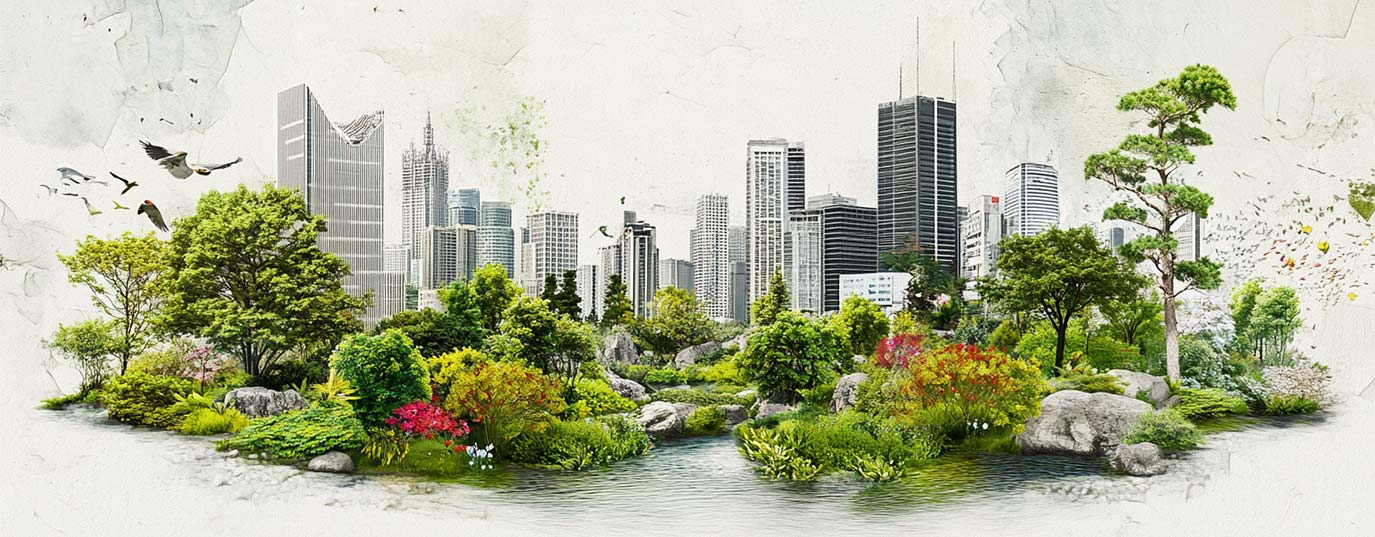
(Re)Natured Cities arises from the urgent need for sustainable urban transition in Europe. Currently, more than half of the world’s population lives in cities, and by 2050, 6.5 billion people are expected to inhabit urban areas. This places significant pressure on ecosystem services and biodiversity. Paradoxically, many cities prioritise aesthetically “perfect” green and blue spaces – manicured lawns, exotic flowers – at the expense of ecological functionality, biodiversity and climate resilience.
At the same time, there are deep-seated inequalities: economically disadvantaged neighbourhoods have access to green spaces of much lower quality, which affects community health and well-being. Portugal, Ireland, Italy and Cyprus face particular challenges in terms of environmental compatibility, the conservation of native biodiversity and the control of invasive alien species (which cause millions in damage to Europe every year). Meanwhile, traditional management methods (maintenance, resources, costs) do not keep pace with the ambitions of the European Green Deal and the Biodiversity Strategy 2030.
The project also recognises the gap in adult education on these issues: there is a lack of practical, accessible and locally relevant resources to enable local authorities and communities to adopt genuine sustainable practices in their day-to-day lives.
Objectives
Supporting local authorities in their ecological transition
Promoting sustainable practices in line with nature-based solutions
Improving biodiversity and ecosystem services
Raising environmental awareness and ecological literacy
Encouraging citizens’ participation and sense of belonging
Strengthening cities’ resilience to climate change
Expected Results
In local authorities: greater knowledge and technical capacity to manage green and blue spaces sustainably; adoption of new practices in at least some of these spaces; improved cooperation between departments and with environmental experts.
Among adults/citizens: increased awareness of local biodiversity, invasive species and climate change; greater involvement in environmental volunteering; a sense of belonging and pride in their city’s green spaces.
In partner organisations: new methodologies for adult education on sustainability, more European networks and enhanced capacity to work with local authorities.
Activities
Survey of Current Practices (“Green Views“): interviews with municipal officials, field observations and documentation of the current state of urban green and blue spaces and the practical challenges faced.
Development of Technical Modules: 6 modules on nature-based solutions for the management and maintenance of urban green and blue spaces.
Accessible Flipbook (“Flipping Green“): integrating local results into a practical and inclusive resource.
LTTA Activity (Technical Mobility): a transnational meeting of municipal technicians, environmental specialists and project managers to exchange knowledge on nature-based solutions (NBS).
Species Identification: an outdoor community activity in which members of the public identify, photograph and geotag species, contributing to an interactive map.
Practical Rehabilitation and Volunteering Programme: a group of volunteers will work in a specific urban green and blue space identified as requiring intervention.
National Multiplier Events: workshops, seminars and themed fairs to present the project’s results in the partner countries.
Final Conference, featuring presentations on best practices, international workshops and a presentation of the project’s results in the coordinating country.
Available Resources
“Flipping Green“: an illustrated guide comprising technical modules and infographics.
Local Hopes: a compilation of success stories relating to environmental restoration and mitigation in partner countries.
Natural Heritage Guide: a list of key and invasive species, with identification tips and information on their ecological importance.
Interactive Biodiversity Map: a digital platform where communities share data on species they have observed.
Documentary “Green Memories“: about the volunteer programme and the project’s outcomes.
“Sustainability Pledge“: a formal commitment by the project consortium to good environmental practices.
Transnational Network: comprising municipal officials, environmental experts, NGOs and local communities for post-project collaboration.
Featured News
YESDGs Newsletter nº4
A quarta Newsletter do projeto YESDGs já está disponível! PT_YESDGs Newsletter 4Descarregar Download: EN PT
Digital4All – Newsletter #4
Hoje partilhamos a quarta, e última, Newsletter do projeto Digital4All, que chega hoje ao fim. O Projeto Digital4All – Building a Digital World for All teve como principal objetivo promover, nas pessoas que trabalham com jovens migrantes, um conhecimento conceptual...
Perma-Youth: Terceira Reunião Transnacional
Aprendizagem, Partilha e Conexão A terceira reunião transnacional do Projeto Perma-Youth foi um momento de grande progresso e inspiração! Ao longo de duas reuniões de parceiros muito frutíferas, demos passos importantes para o avanço do Projeto, consolidando ideias e...
GROWS Newsletter #3
A terceira newsletter do projeto GROWS já está disponível! GROWS newsletter 3 PortugueseDescarregar O GROWS é um projeto Erasmus+ que começou em dezembro de 2023 e tem como objetivo capacitar os prestadores de EFP sobre a importância da gestão sustentável de resíduos...
CO-BIO Newsletter #3 – Descubra as últimas novidades do projeto
O projeto Co-Bio apoia a Estratégia de Biodiversidade da UE para 2030, com destaque para a biodiversidade urbana.Nesta terceira newsletter, destacamos as principais atividades: Relatório Intercalar do Projeto Co-Bio aprovado: Um marco importante para a concretização...
ACT4Consent – Newsletter 3
A terceira Newsletter do Projeto ACT4CONSENT está lançada! Download: A4C Newsletter 3 Com este projeto, pretendemos utilizar a dramatização e a narração de histórias para ajudar os professores a abordar o tema do consentimento com os alunos na sala de aula....
CO-BIO – Intercâmbio de Casos Locais sobre Cocriação de Biodiversidade Urbana em Viena
O projeto Co-Bio apoia a Estratégia de Biodiversidade da UE para 2030, com destaque para a biodiversidade urbanaNos passados dias 25 a 27 de fevereiro, tivemos a oportunidade de estar presente no Intercâmbio de Casos Locais implementados no contexto da Cocriação de...
Together We Can – Policy Brief
A Mudança começa aqui!A integração de mulheres migrantes no mercado de trabalho, educação e formação é um desafio essencial para a construção de uma Europa mais inclusiva e igualitária. Para responder a esta necessidade, o nosso Policy Brief, desenvolvido a...
Raise the BAR – Newsletter #3
Projeto Raise the BAR - Newsletter 3 Hoje partilhamos a terceira Newsletter do projeto Raise the BAR - Tornar-se uma Escola Antirracista. Nesta newsletter mostramos como foi a formação de professores na Grécia e os próximos passos do projeto. Fiquem atentos ao...
YESDGs: Press Release
Nos últimos dias 14 e 21 de fevereiro foram levadas a cabo as pilotagens do material educativo YESDGs em Portugal. Estas pilotagens foram realizadas com técnicos da juventude e jovens que se encontram em fase de preparação para participar na Hackathon YESDGs em junho...
The project
(Re)Natured Cities – Supporting Municipalities in the design and management of more sustainable green and blue spaces
Project number
KA220-ADU-E41AE980
Implementation Date
01/11/2025 – 31/10/2027
24 months
Funding
Erasmus+ Adult Education
Info & Contact Details
catarinanunes@rightchallenge.org
Website
www.renatured-cities.eu/
Social Media




under development
Partnership
 Portugal